
SHARK SAFETY FOR FREEDIVERS AND SNORKELLERS
Shark Safety: A Practical Guide for Snorkellers & Freedivers
Feeling nervous about getting back in the water in Sydney following recent shark incidents? Not sure how to stay shark-safe as a snorkeller or freediver? You’re not alone.
It’s understandable. Shark bites receive major media coverage because they are unusual, they are scary, and they play into long-held cultural narratives. The shark is the ultimate ‘villain’ and the ultimate clickbait.
We believe that there IS a healthy way to coexist with sharks, still taking part in snorkelling, freediving and the ocean activities we love, whilst taking steps to understand and manage the risk of shark encounters. After all, ALL activities in nature come with their own risks.
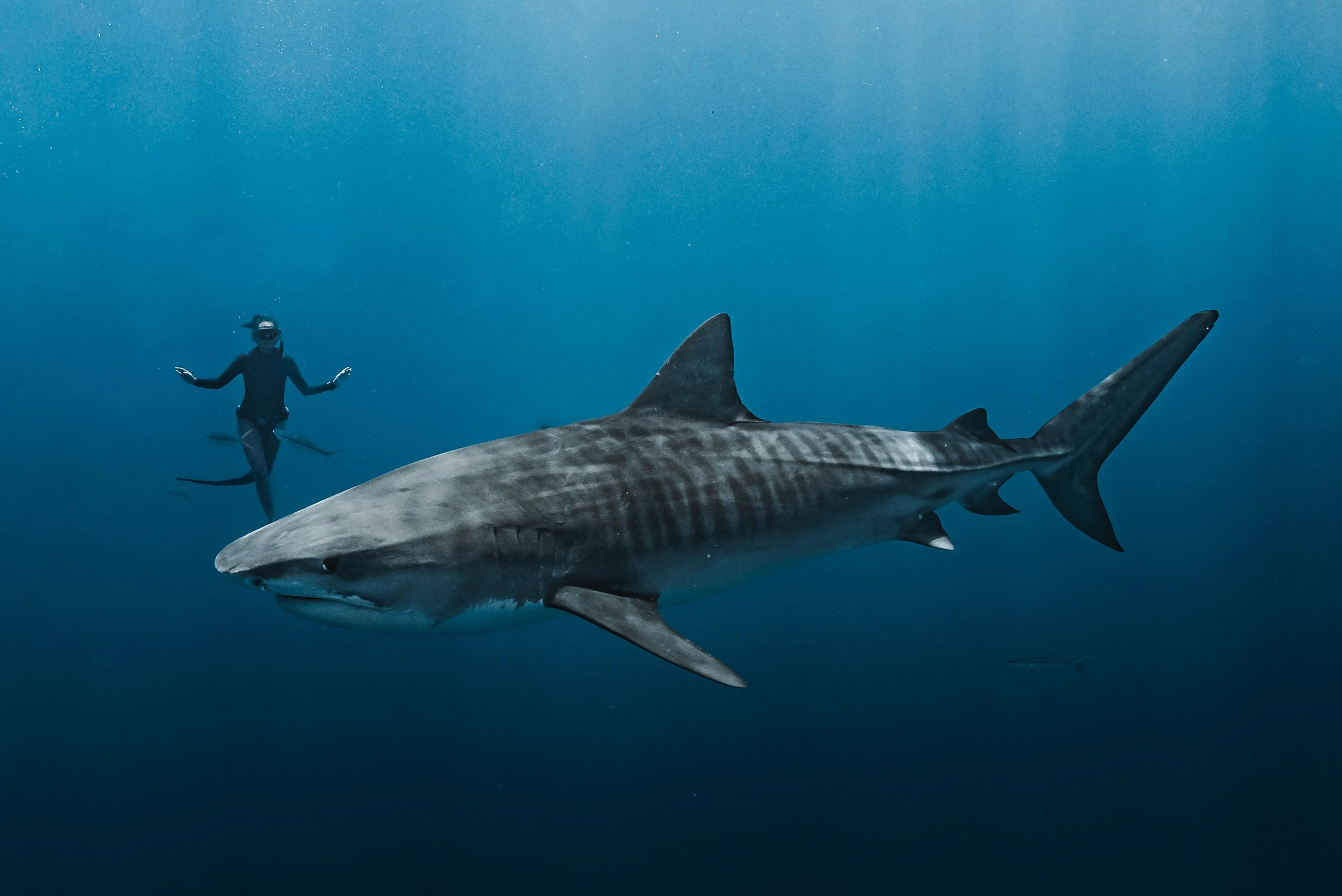
Sharks are highly misunderstood predators. We CAN co-exist with them.
So we’ve decided to share with our community the steps WE take to manage shark risk, as professional freedivers and as a commercial dive operator.
This guide explains our approach to shark safety for freedivers and snorkellers, and it can be applied to all regions and countries.
BEFORE YOU LEAVE HOME
Good decisions usually begin before you arrive at the dive site.
TAP INTO LOCAL KNOWLEDGE
It’s good practice whenever you’re adventuring into the wild, regardless of your feelings about sharks: Get to know wildlife seasonal activity, typical conditions and risks for each dive site.
Local dive centres - drop in for a chat or check socials/websites for recent condition reports and wildlife sightings
Community freedive and snorkel groups - tune in for visibility reports, wildlife sightings, and suggestions
Shark activity trackers - In NSW Australia we have the SharkSmart App showing recent tagged shark activity
CHECK FORECAST & DAYLIGHT HOURS
Use a tool such as WINDY to check out conditions if you’re planning a future dive. Avoid snorkelling or freediving after:
Heavy Rain
Big Swell
during Sunrise or Sunset
These conditions can lead to lower visibility. Lower visibility increases risk by potentially giving sharks more advantageous hunting conditions. Sharks are known to be more active hunters during twilight hours.
KNOW YOUR SHARKS
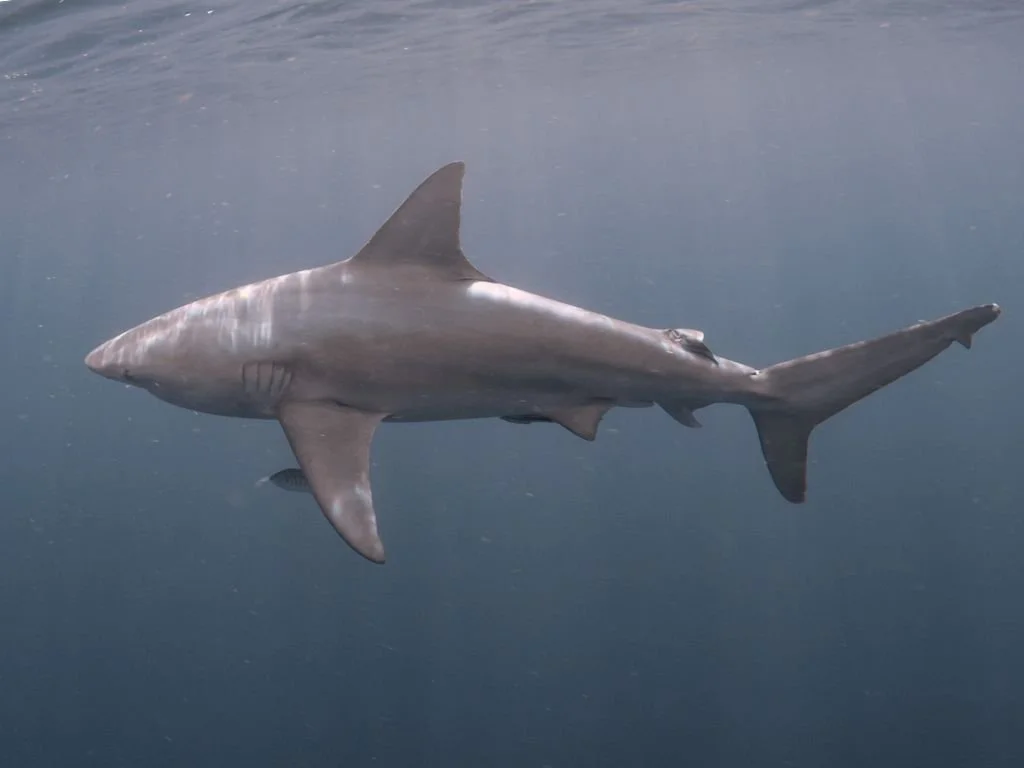
Teach yourself to ID the typical sharks found in the area you’re snorkelling or freediving. It’s very helpful to know the difference between harmless sharks and higher-risk shark species
Use resources such as the NSW SharkSmart site to learn how to ID.
SAFETY IN NUMBERS
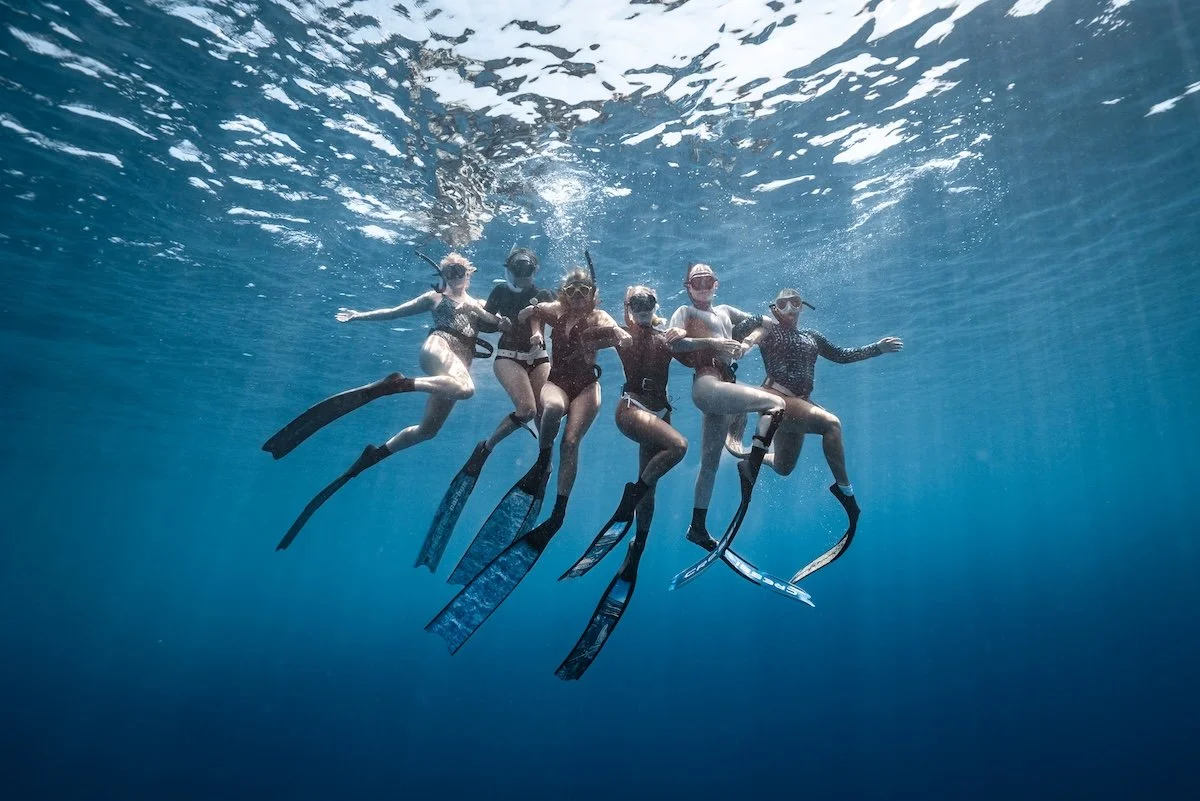
OK we shouldn’t need to write this one. Every time you go in the ocean you need a buddy. It’s the most important safety measure in freediving and snorkelling.
More people means:
better communication
more eyes
immediate assistance
Also, a large group is far less appealing to a curious shark.
WHEN YOU ARRIVE
Avoid rushing straight into the water. Spend a few minutes observing the environment before putting your mask on.
LOOK FOR EVIDENCE OF FEEDING ACTIVITY
High levels of fish activity may attract mid-level predators, which may attract higher-level predators such as sharks.
Look out for:
Surface splashing
Diving birds in one area
Dolphins, sealsand marine mammals concentrated in one area
None of these observations automatically means it is unsafe to dive, but they should influence your decision-making.
Do not go swimming straight towards an area of clear feeding activity.
AVOID FISHING, SPEARFISHING AND SHARK MITIGATION ACTIVITY
Fishing boats
fish cleaning stations
drumlines
active spearfishing
These activities all introduce sharkfood into the water.. Try to choose another entry point or another dive site.
If you’re spearfishing, PLEASE avoid popular recreational snorkelling and freediving sites where possible.
Separating these activities benefits everyone sharing the water.
PLAN YOUR EXIT
Before entering the water for a snorkel or freedive, plan how you will leave it. Have a plan B exit if you’re covering a large distance.
If conditions change unexpectedly, or you spot a shark, having an exit plan avoids rushed and fearful decisions.
BE PATIENT
Always spend some time communicating with your buddy and observing the dive site. Make sure you agree on your emergency plans.
If you’re freediving or snorkelling from a boat, wait a few mins after turning off the engines. In our experience, nearby sharks are more interested in the boat’s engine than a couple of boring snorkellers.
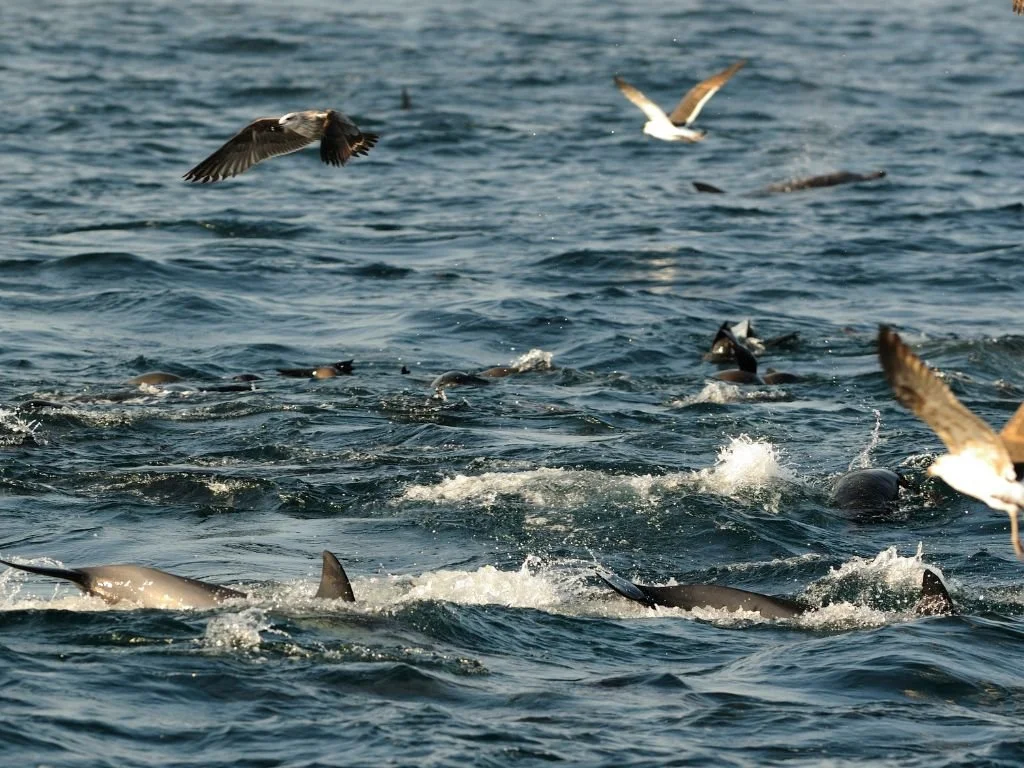
Heaps of action from marine birds and mammals usually indicates a big feeding event. Sharks may be present.
IN THE WATER
BE AWARE OF YOUR BUDDY AND YOUR SURROUNDINGS
Keep alert and look out for changes in conditions, visibility, wildlife behaviour.
Stick with your buddy! You should be no more than 10 second swim from them on the surface.
LISTEN TO YOUR INTUITION
If something feels off, don’t continue. You won’t enjoy the session and you never know what you’re picking up on.
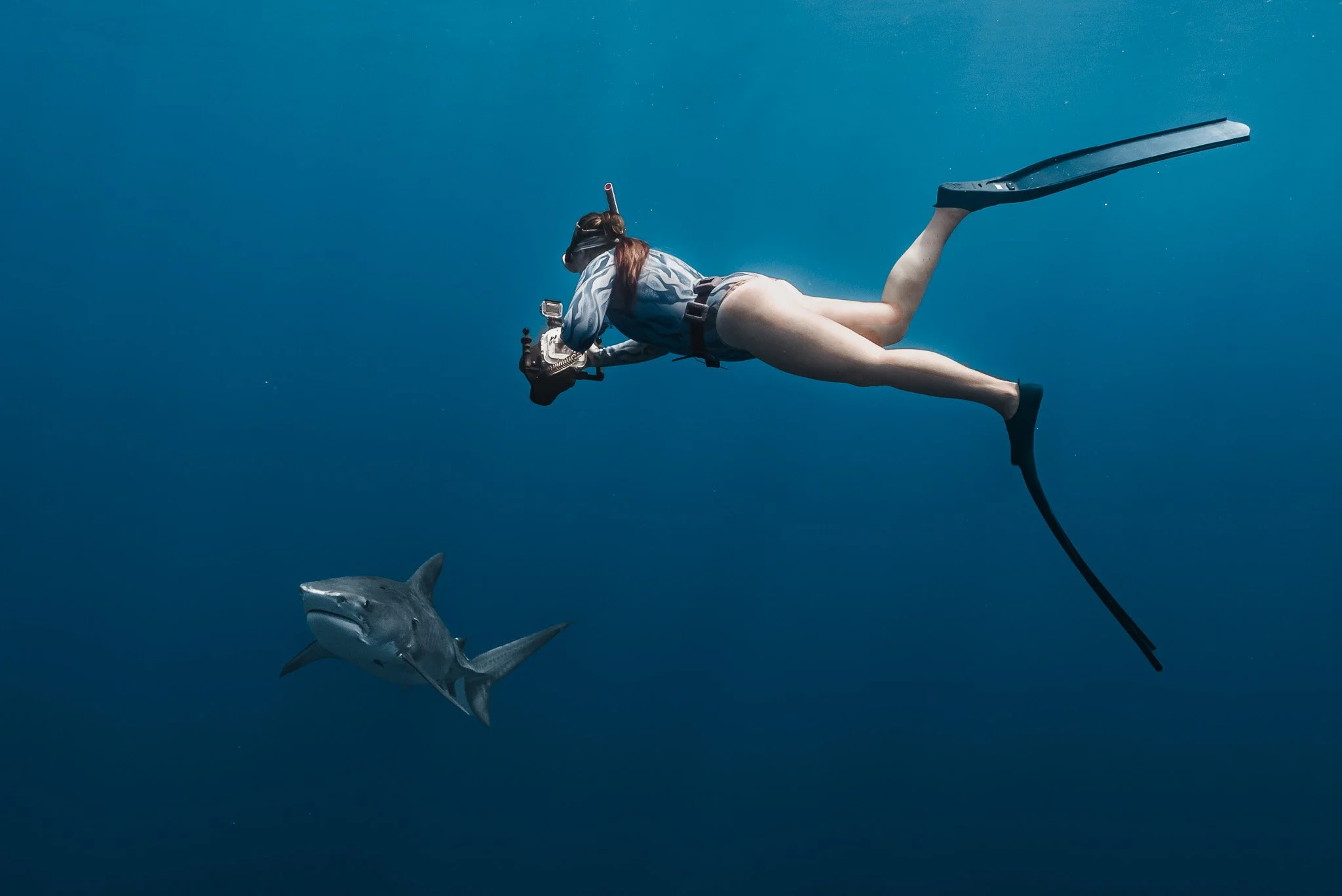
WHAT TO DO IF YOU SEE A SHARK
The majority of sharks are not interested in people and will simply continue on their way.
If you do spot a shark, and you’re not sure it’s a ‘harmless one’:
Remain calm and avoid splashing frantically
Regroup with your buddy
Keep your eyes on the shark at all times
Try to put an object between you and the shark (i.e. fins or camera)
Slowly and calmly move to your exit point
Sharks are risk-averse and will likely avoid you if you’re acting more like a predator than prey.
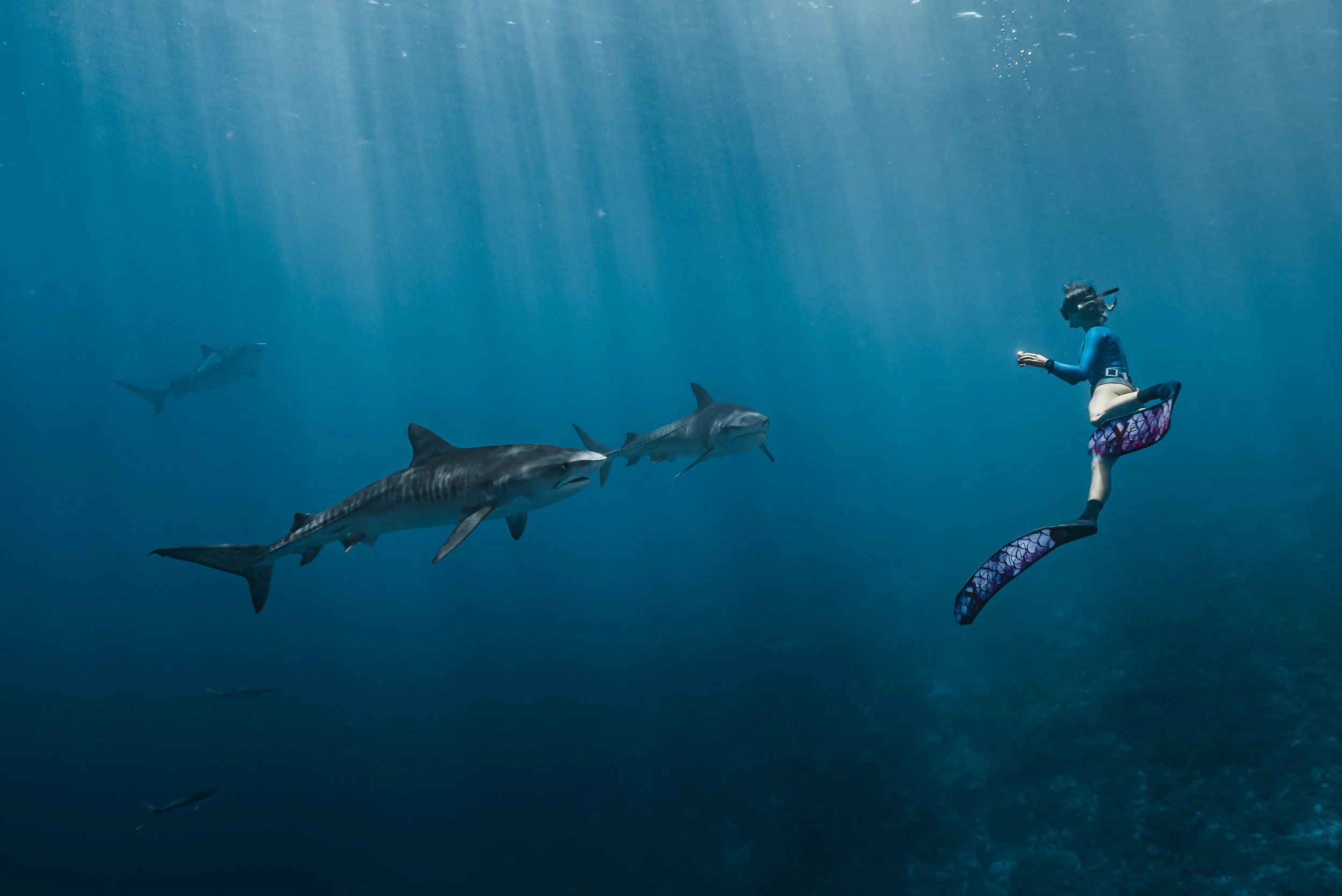
If you see a shark, keep eyes on the shark and avoid panicked, frantic movements
EQUIPMENT
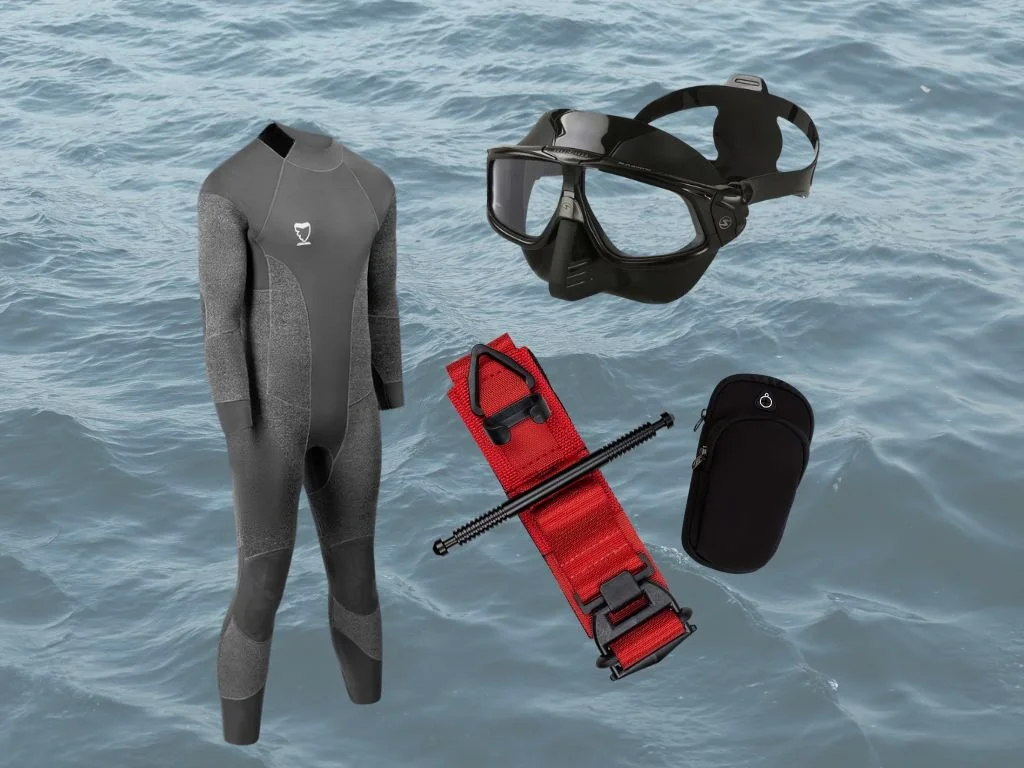
No piece of equipment replaces good judgement or careful planning, but there’s some freediving and snorkelling gear out there that may provide additional safety.
A tourniquet carried somewhere accessible.
A curved mask that provides good peripheral vision, so you have a wider field of vision.
Personal shark deterrent devices, - evidence is limited and anecdotal experience has highly conflicting results
Bite-resistant wetsuits such as SharkStop - designed to reduce the severity of bites rather than prevent bites altogether.
When thinking about shark safety, do NOT lose sight of freediving and snorkelling safety.
The risk of drowning and blackouts far outweighs the risk of shark encounters. Use equipment that is safe, high-quality and helps keep you visible to your buddy.
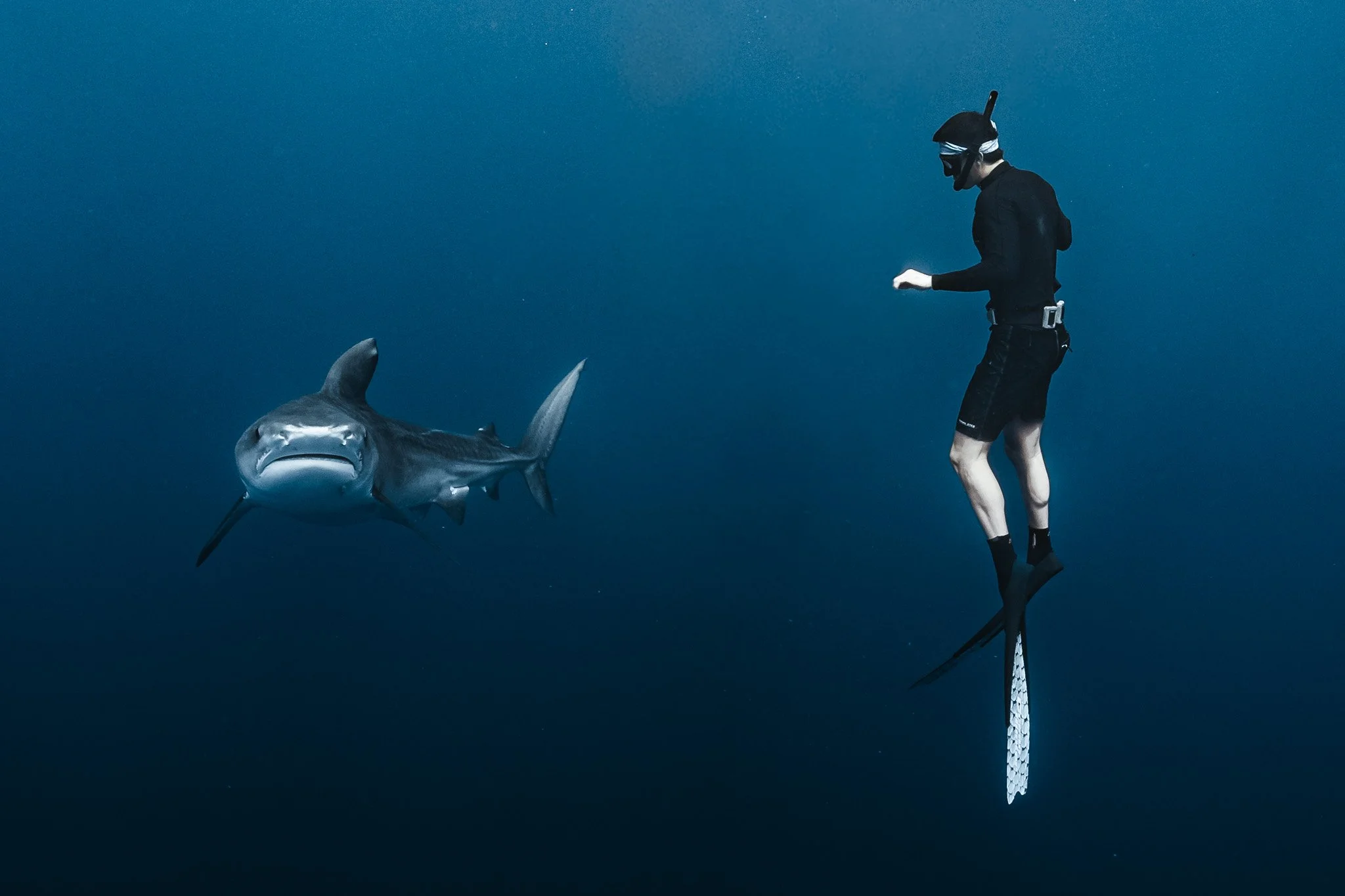
OCEAN CONFIDENCE
is so much more than guaranteeing you will be 100% safe at all times.
It comes from:
Knowing the measures you CAN control to improve your own safety
Sharing and learning from professionals, peers and other water users
Building the skills and knowledge you need to enjoy the water as safely as possible
Accepting that the beauty of being in the ocean comes from its wild and uncontrollable nature.
WE WANT TO HEAR FROM YOU!
What would you add to this list? We appreciate hearing about your experiences and tools. Drop us an email or a comment on Instagram and let us know your thoughts!
WANT TO DIVE DEEPER?
Here’s some recommended reading which has heavily informed our knowledge, along with collective decades of experience across the team.
Check conditions & shark activity
NSW SharkSmart — app, alerts and beach info: https://www.sharksmart.nsw.gov.au/sharksmart-app
NSW SharkSmart — how to identify sharks: https://www.sharksmart.nsw.gov.au/about-sharks
Understand the actual risk
Australian Shark-Incident Database (Taronga): https://www.taronga.org.au/conservation-and-science/australian-shark-incident-database
The database explained (peer-reviewed, Scientific Data, 2022): https://www.nature.com/articles/s41597-022-01453-9
The science on deterrents
Flinders University — testing personal shark deterrents: https://news.flinders.edu.au/blog/2022/11/20/new-tests-on-shark-deterrents/
Huveneers et al., Effectiveness of five personal shark-bite deterrents for surfers (PeerJ, 2018): https://peerj.com/articles/5554/
The science on bite-resistant wetsuits
Flinders University — wetsuits tested for bite resistance (2025): https://news.flinders.edu.au/blog/2025/09/25/30399/
Whitmarsh et al., Effectiveness of novel fabrics to resist punctures and lacerations from white shark (PLOS One, 2019): https://journals.plos.org/plosone/article?id=10.1371/journal.pone.0224432
Shark behaviour & senses
OCEARCH — how white sharks navigate and sense their world: https://www.ocearch.org/blog/shark-senses/